

BIODIVERSITY AND CHIMPANZEE CONSERVATION
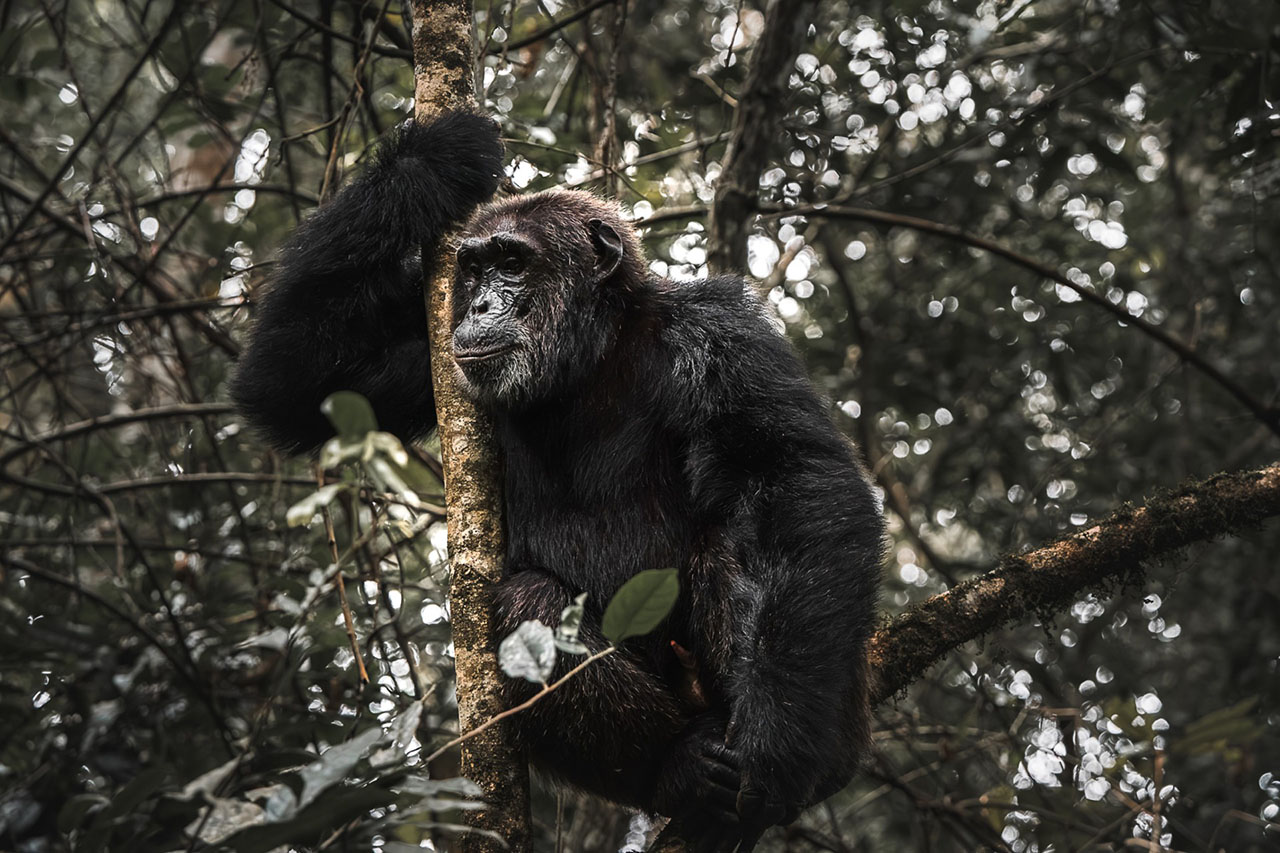
This project restores and monitors groups of chimpanzees and sitatungas that live in the private forests in Itohya forest in Munteme village in Kikuube District. Justice Tourism Foundation, in its mandate, is obliged to continuously implement habitat monitoring in the Albertine Rift region and the Itohya forest. Itohya is the only large private forest in the Kikuube district, being one of the areas of focus since it is a harbour to more chimpanzees in the area.
The 372-hectare tropical rainforest lies on private land and has the river Itohya flowing through it as it finds its way into Lake Albert. The forest boasts a heavy wildlife presence of monkeys, baboons, Uganda mangabeys, and other wildlife species, including birds and a community of more than 100 chimpanzees.
The Itohya Forest is a vital, privately-owned 800-acre forest in Uganda’s Albertine Rift, crucial for endangered Eastern chimpanzees, but facing threats from agricultural expansion, leading to human-wildlife conflict. Conservation efforts, led by Justice Tourism Foundation and partners, focus on community involvement, habitat restoration (tree planting), creating corridors, and establishing ecotourism (Itohya Munteme site) to balance human needs with conservation, turning local communities into partners in protecting this biodiversity area.
Why Biodiversity and Chimpanzee Conservation
The conservation of chimpanzees is an urgent global priority due to their critical ecological roles, evolutionary significance, and precarious status. Protecting them ensures the preservation of biodiversity, supports ecological balance, and fulfills ethical obligations to conserve life on Earth. Immediate action is necessary to raise enough funds for habitat protection, anti-poaching measures, sensitization and awareness campaigns and community involvement to prevent their extinction.
Biodiversity and chimpanzee conservation are important because they support healthy ecosystems, provide essential resources for humans, and have economic and scientific value. Chimpanzees are a key part of their ecosystem, helping to maintain forest health through seed dispersal, while the broader conservation of biodiversity provides benefits like climate regulation, clean water, and the potential for new medicines. Planting tree species has significant positive conservation impacts, primarily by mitigating climate change, restoring ecosystems, and supporting biodiversity. Trees help reduce greenhouse gases, clean the air, and stabilize soil, preventing erosion and protecting watersheds. They also play a vital role in supporting diverse ecosystems, providing habitats and food sources for various species, and aiding in carbon sequestration.
What does tree planting mean for biodiversity?
Biodiversity and chimpanzee conservation are crucial because chimpanzees are key to forest health, acting as seed dispersers that maintain forest structure and regeneration. Today, all four current subspecies of chimpanzees are classified as either endangered or critically endangered. Habitat loss, forest degradation, and other threats leave wild chimpanzee populations isolated and at high risk of poaching.
The conservation of chimpanzees is an urgent global priority due to their critical ecological roles, evolutionary significance, and precarious status. Protecting them helps preserve biodiversity, supports ecological balance, and fulfills ethical obligations to conserve life on Earth. Immediate action is necessary to raise enough funds for habitat protection, anti-poaching measures, sensitization and awareness campaigns, and community involvement to prevent their extinction.”
Studying chimpanzee cognition and behavior helps us understand disease transmission patterns and enhances conservation strategies. Furthermore, their presence promotes overall ecosystem health, benefiting countless other species, including humans. According to the Wildlife Conservation Society, safeguarding chimpanzees is integral to preventing biodiversity loss and extinction threats.
Observing chimpanzees in the wild offers a rare and rewarding experience that connects you directly with nature’s intricate balance. Whether you’re trekking through forests on an ecotourism adventure or participating in research expeditions, witnessing their behaviors firsthand deepens your appreciation for their ecological impact. Supporting preservation efforts ensures these habitats remain intact, allowing chimpanzees to continue their crucial ecological roles. According to IFAW, chimpanzee populations thrive in communities led by alpha males, showcasing sophisticated social networks vital to their survival. Embracing these experiences encourages responsible outdoor stewardship and strengthens commitment to conservation.
THE PROGRAM HAS THE FOLLOWING SPECIFIC OBJECTIVES:
- To monitor the chimpanzee populations in the greater Kikuube district
- To conduct environmental conservation in the community neighboring chimpanzee habitats
- To implement reforestation activities that will restore the habitats for chimpanzees and other threatened biodiversity
Conclusion
Their conservation prevents extinction, maintaining a healthy planet for all species, humans included. Their ecological role cannot be overstated—protecting chimpanzees means safeguarding the intricate web of life in which we all depend. Prioritize chimpanzee conservation importance today and embrace the ecological benefits they provide to ensure a sustainable future.
Book Your Ugandan Dream Safari Today!
Join Our Global Community Of Impact-Minded (Conscious) Travelers Who Want To Move Beyond Traditional Tourism To Engage In Genuine Cross-Cultural Connection And Learning Opportunities – Inspiring Compassion Towards Fellow Human Beings.