

BIODIVERSITY AND CHIMPANZEE CONSERVATION
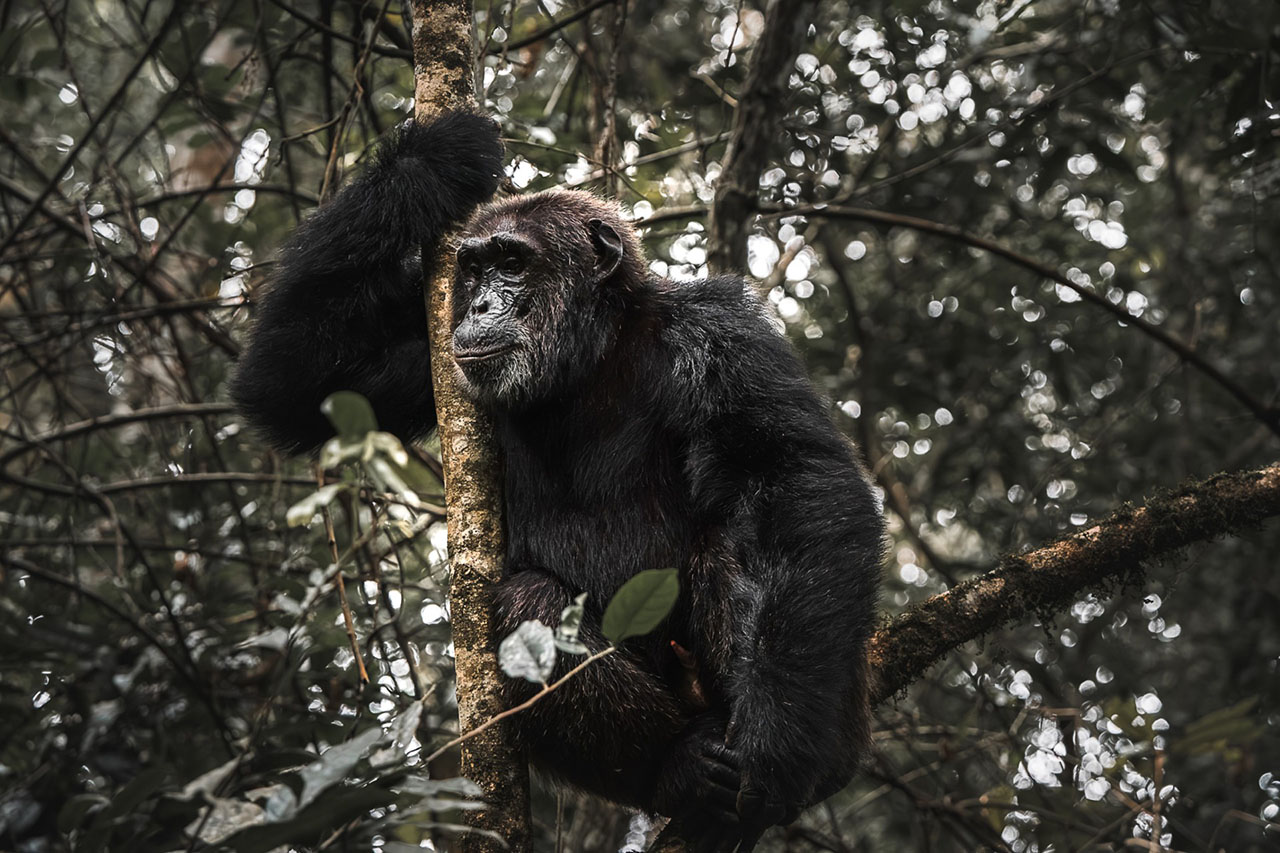
Uganda is home to an estimated 5,000 common chimpanzees, making it a stronghold for the species in East Africa, with a key population in Kibale National Park. 1,500 are alive today, but struggling for a tomorrow. Surrounding their protected habitat are isolated and impoverished communities. Due to their proximity, both inside and outside the national park, these communities are faced with daily wildlife-human conflicts, leading to struggles for space and water. Elephants, chimpanzees, baboons, and monkeys are fairly regular visitors in the Kahangi community, lured by water, bananas, maize, and other food crops which are grown in the area by the villagers. These wildlife caused intensive crop damage and frequently attacked both humans and their cattle. This understandably made the villagers less tolerant of wildlife. They often resorted to poisoning them. There is little incentive to look after the wildlife because community members do not financially benefit from the tourism business that wildlife attracts. And their means of livelihood were being undermined by that same wildlife. This, along with habitat encroachment, poaching, and economic instability, is threatening the coexistence of both the communities and the wildlife.

The “Coffee And Honey For Conservation Program” is an alternative strategy to encourage the communities to plant non-preferred crops (like coffee) as an income-generating activity (AIGAs) to replace food crops, which attracts chimpanzees, elephants and other wildlife by focusing on crops and livelihoods that are non-palatable to chimpanzees, elephants, and other wildlife, higher-value, and support sustainable coexistence with wildlife. Chimpanzees and elephants do not eat coffee berries, and it provides a valuable, high-income cash crop that grows well in existing gardens without requiring further deforestation and encroachment on the park.

Beekeeping (Beehives fencing) not only serves as a security barrier to deter elephants from entering farms, but it is also a highly effective alternative income source for the communities. Products such as honey, beeswax, and bee venom have a market. In addition to providing pollination services (which could increase crop yields) and honey and beeswax (which farmers can sell to diversify their income), while promoting forest conservation and reduces poaching in the forest, ultimately conserving local biodiversity and helping maintain the natural environment.

Integrating coffee farming with beekeeping (honey production) is a sustainable agroforestry model that promotes conservation by enhancing biodiversity, reducing the need for harmful chemical pesticides, and providing economic alternatives to human and wildlife conflicts and deforestation. This alternative strategy allows farmers adjacent to Kibale National Park to coexist with the wildlife while improving their livelihoods through diverse income streams.

The “Coffee and Honey for Conservation Program further supports the farmers through training in sustainable coffee farming and processing. This helps to improve the coffee quality and increase production yield. Supporting local farmers helps to protect the critically endangered Chimpanzees and their fragile habitat. The program prioritizes women and makes a special effort to support women coffee farmers, helping to provide opportunities for women’s economic empowerment, disrupt male financial dominance, and break ingrained stereotypes in the communities. The program also supports farmers through training in sustainable beekeeping, and processing is a high-impact, low-cost intervention that improves rural livelihoods while promoting biodiversity. This

Book Your Ugandan Dream Safari Today!

Join Our Global Community Of Impact-Minded (Conscious) Travelers Who Want To Move Beyond Traditional Tourism To Engage In Genuine Cross-Cultural Connection And Learning Opportunities – Inspiring Compassion Towards Fellow Human Beings.