

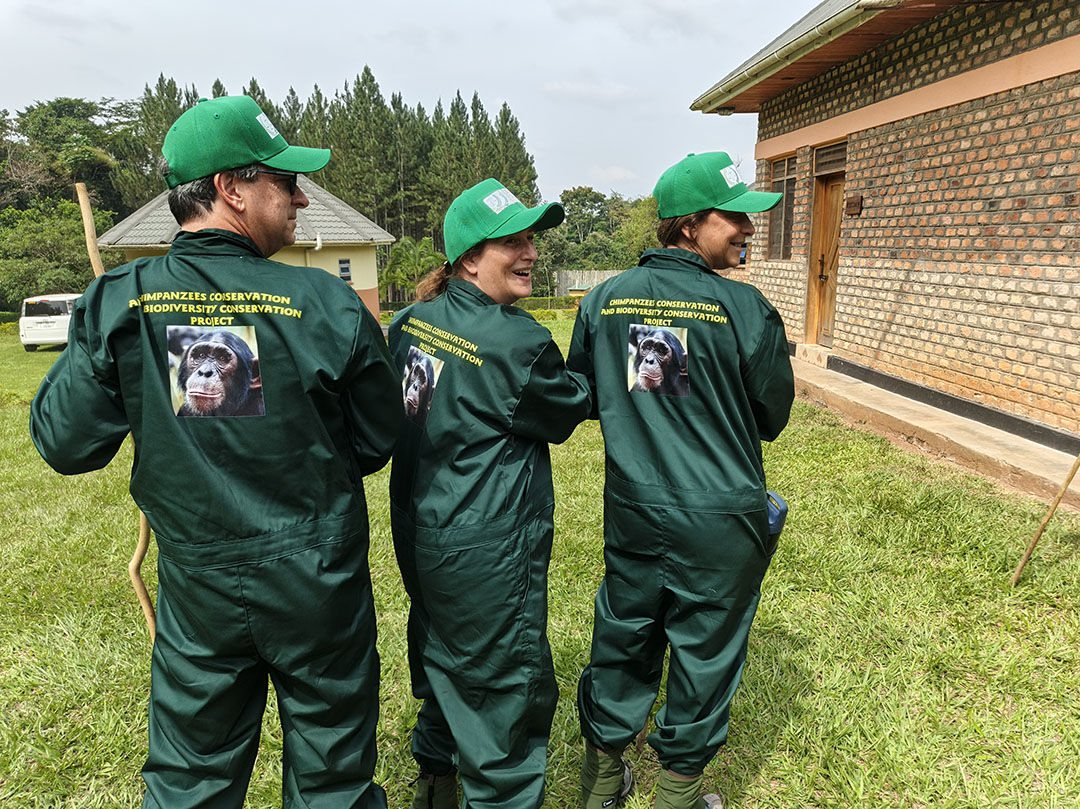
Uganda is one of the richest countries in Africa for biodiversity conservation, ranking second richest for mammals (and 13th globally), second for birds, and seventh for higher plants. This is because several major Biomes meet here, each with its associated fauna and flora. Kibale National Park is a significant biodiversity hotspot in Uganda, home to numerous primate species, over 370 bird species, and 351 tree species. Conservation efforts focus on protecting its rich primate populations, especially the endangered chimpanzees, through community-based projects aimed at mitigating human-wildlife conflict and research.
Critical to protecting these vital ecosystems are people.
While sharing land with the wildlife, communities around the Kibale National Park often suffer from wildlife-human conflicts, leading to struggles for space and water. Human-wildlife conflict occurs when encounters between humans and wildlife lead to negative results, such as loss of property, livelihoods, and even life. Crop-raiding by elephants has been devastating for small farmers, leading to food insecurity, lost opportunity costs, and even death. Crop-raiding and property damage resulted in negative attitudes by the community towards elephant conservation, and they retaliate by spearing, snaring, or poisoning elephants and chimpanzees. Such conflict between elephants, chimpanzees, and people is widespread across the Kahang village, a rural community adjacent to Kahangi National Park near Fort Portal city in western Uganda.
This understandably makes the villagers less tolerant of wildlife. They often resorted to poisoning them. There is little incentive to look after the wildlife because community members do not financially benefit from the tourism business that wildlife attracts. Human-wildlife conflict poses major threats to the well-being of both humans and animals. Defensive and retaliatory killing may eventually drive these species to extinction. If people and wildlife learn to live together — inside and outside of protected areas — the future for all will thrive.
Human-wildlife conflict is, therefore, as much a development and humanitarian issue as it is a conservation concern, affecting the income of farmers and herders, particularly those with incomes below the poverty line.
Justice Tourism Foundation is continuously studying and monitoring the interactions between humans and wildlife to help in understanding the drivers of conflict and success, and allows for adaptive management strategies.
Book Your Ugandan Dream Safari Today!
Join Our Global Community Of Impact-Minded (Conscious) Travelers Who Want To Move Beyond Traditional Tourism To Engage In Genuine Cross-Cultural Connection And Learning Opportunities – Inspiring Compassion Towards Fellow Human Beings.